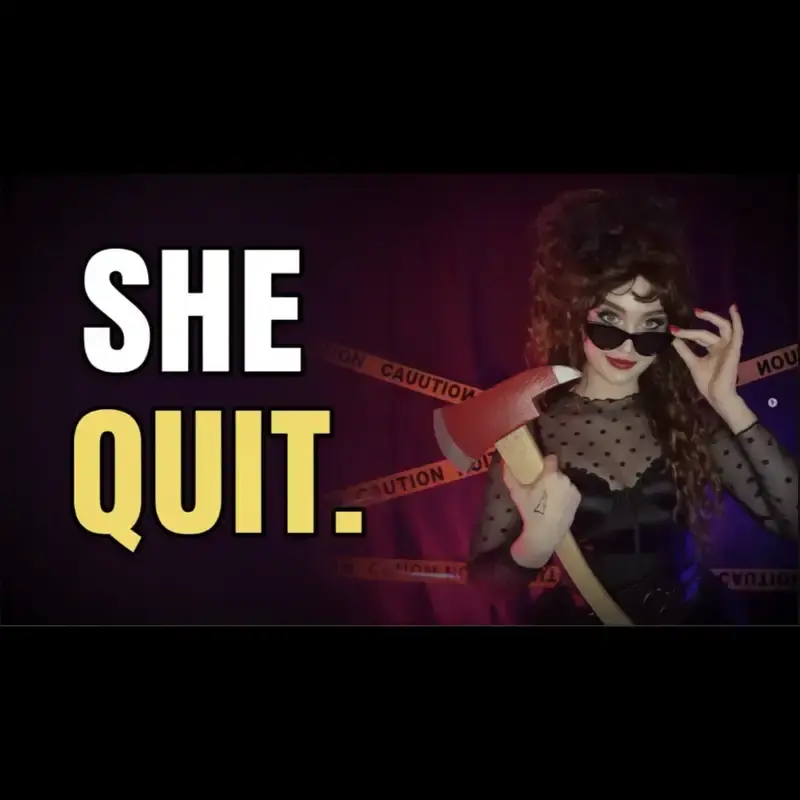
From Political Media to Cosplay: How Ashton Blaise Found Her Authentic Voice
- David Shaft

- May 27, 2025
- 3 min read
Updated: Apr 24
Ashton Blaise spent her twenties building the career she was supposed to want. Political media. The kind of work that looks impressive on paper, pays reasonably, and gives you something to say at dinner parties. She was good at it. And somewhere along the way she realized she was living someone else's version of success.
This conversation, recorded live at Nightmare Weekend in Chicago, is one of the most honest conversations on authentic voice and career identity we have had on this show.
What Political Media Taught Her About Communication
Working in political media, Ashton learned how to craft a message, manage a narrative, and communicate under pressure. Those are real skills. The problem was not that the skills were wrong. The problem was that she was deploying them for a vision she did not own.
There is a specific kind of professional exhaustion that comes from being good at the wrong thing. You are too skilled to have obvious failure to point to. You cannot easily explain to people why you are unhappy because from the outside everything looks fine. Success by someone else's measure is one of the loneliest experiences in professional life.
She carried that for years before she said it out loud. The conversation that followed that honesty changed the direction of everything.
The Cosplay Community and What She Found There
When Ashton entered the cosplay community, she found something she had not expected: a community that rewards showing up as exactly who you are. Not who you think you should be. Not the version of yourself that is most acceptable to the most people. The actual you.
In political media, success often requires a certain amount of self-suppression. You manage your image carefully. You are strategic about what you reveal. The cosplay community operates on a completely different set of rules. Authenticity is currency there.
The communication skill she had to build was the one she had been avoiding: saying what she actually thought. Not the carefully managed version. The real version. That skill transfers to every area of life once you build it.
How She Communicates Her Value in a Field Nobody Understood
Cosplay is not a field that comes with a built-in explanation. Most people outside the community have questions before they have understanding. Ashton had to develop the ability to communicate her value and her passion to people who had zero context for either.
That kind of communication is harder than most. You cannot lean on shared vocabulary. You cannot assume the listener knows why what you do matters. You have to build the case from the beginning every time.
She got good at it. What she describes is what I have heard from every guest on this communication podcast who built something genuinely new: the explanation that sounds impossible to give eventually becomes second nature. You just have to give it enough times.
What Living Someone Else's Success Costs You
The cost of building a career that fits someone else's definition of success is paid slowly. You do not feel it as a crisis. You feel it as a low-grade flatness. A sense that you are functional but not fully alive at work.
For Ashton, the accumulation of that flatness over time became undeniable. The moment she named it out loud was the beginning of a real conversation with herself about what she was actually building and for whom.
The most important conversation in professional development is the one you have with yourself about whether you are working toward your life or someone else's. Ashton had that conversation and acted on it. Most people have it and then look away.
Key Takeaways from This Episode
Being good at the wrong thing is a specific kind of professional loneliness. It is hard to explain because from the outside everything looks fine.
Authentic communication starts with the willingness to say what you actually think instead of the carefully managed version.
When communicating your value in a field nobody understands, you have to build the case from the beginning every time. That skill becomes second nature with practice.
Living someone else's definition of success feels like a low-grade flatness, not a crisis. It accumulates slowly and costs you more than you realize.
The most important professional development conversation is the one you have with yourself about whether you are working toward your life or someone else's.
About Ashton Blaise
Ashton Blaise left a career in political media to pursue cosplay full time. She was recorded live at Nightmare Weekend in Chicago. Her story is one of the clearest examples of what it looks like to audit your definition of success and act on what you find.
Watch and Listen
Level Up Your Communication Skills
Download The Communication Playbook. Free. Built around the frameworks and conversations from this show.
Get your free copy: https://conversations-that-count.kit.com/e7fa86a708
FLAG: NO TRANSCRIPT. Blog post generated from metadata only. Paste transcript to generate full version.
Comments